
The Key Machine at the Checkout Lane, Honestly Explained
You’ve seen them by the exit at the home-improvement store, the grocery store, sometimes the pharmacy: a bright self-service kiosk with a screen, a slot for your key, and a promise of a copy in under a minute. The famous kiosk brands — the minuteKEY machines at big-box stores, the KeyMe kiosks at groceries and convenience chains — have put key duplication next to the gum and the gift cards. And here’s something you won’t hear from every locksmith: for one specific job, the kiosk is genuinely the right tool.
 The problem is everything else. Kiosks copy one narrow kind of key under one narrow set of conditions, and the further your situation drifts from that sweet spot — a worn key, a chipped car key, a lockout, a lock that needs work — the more the machine quietly hands the job back to you, usually after taking your money. This guide lays out what the famous kiosks actually do, the five jobs no machine can touch, what each option really costs in Buffalo, and how to decide in ten seconds which one your problem needs.
What a Key Kiosk Is Genuinely Good At
A kiosk is an optical scanner attached to a cutting wheel. It photographs your key’s blade, matches the profile to a standard blank, and cuts a duplicate. Modern machines do this well, and the app-connected brands can even save your key’s cutting pattern to an account so you can order copies later. Credit where due — the kiosk wins when all of these are true:
- It’s a plain brass key — a basic house key, padlock key, or simple office key with no chip, no remote, no “Do Not Duplicate” stamp, no odd keyway.
- The original is fresh and healthy. Crisp cuts, no wobble in the lock, no “jiggle it just right” ritual.
- You just want a spare, you’re already at the store, and a few dollars is the budget.
That’s a real use case — a fresh spare of a healthy house key for a few bucks while you’re buying milk. If that’s your situation today, use the kiosk with our blessing. Now here’s where the sweet spot ends.
The Five Jobs the Machine Can’t Do
1. Anything with a chip in it — which is almost every car key since the late ’90s
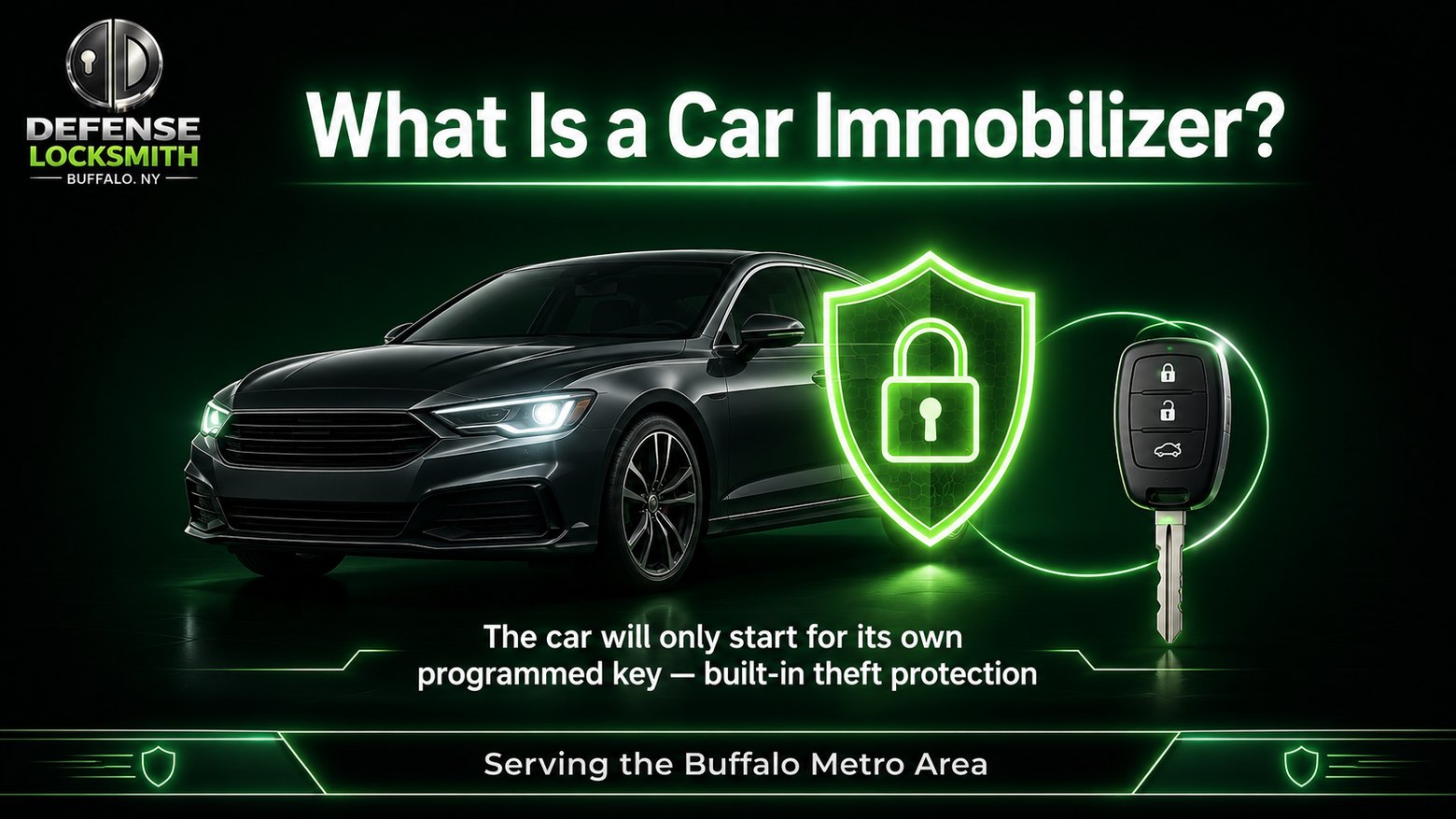
 Nearly every car key made in the last 25 years contains a transponder chip that must be programmed to your vehicle’s immobilizer. A kiosk can cut the metal blade perfectly, and that blade will turn your ignition — and the car still won’t start, because the engine computer has never met that chip. Some kiosk brands work around this by mailing you a car key days later, which still commonly needs in-person programming to actually start the vehicle. A mobile locksmith cuts and programs at your curb in one visit. See our transponder programming and key fob programming services for what that involves.
2. Worn keys — the copy-of-a-copy problem
A kiosk photographs whatever you feed it, including twenty years of wear, and then faithfully reproduces the wear. Copy a worn key and you get a new key with old problems; copy a copy and the errors stack. It’s the main reason kiosk keys come home and don’t turn. A locksmith doesn’t duplicate the damage — we measure the lock or decode the original back to its factory cut depths and cut a key to code, effectively giving you a fresh factory key. A machine can’t make that judgment call, and when its copy fails, there’s no one standing next to it to fix anything.
3. Getting you back inside
The kiosk’s cruelest limitation is timing: the moment you most need a key is the moment your only copy is locked inside. No machine opens doors. House lockouts and car lockouts are human work — trained, non-destructive entry at your door, starting at $35 here in Buffalo.
4. The lock itself
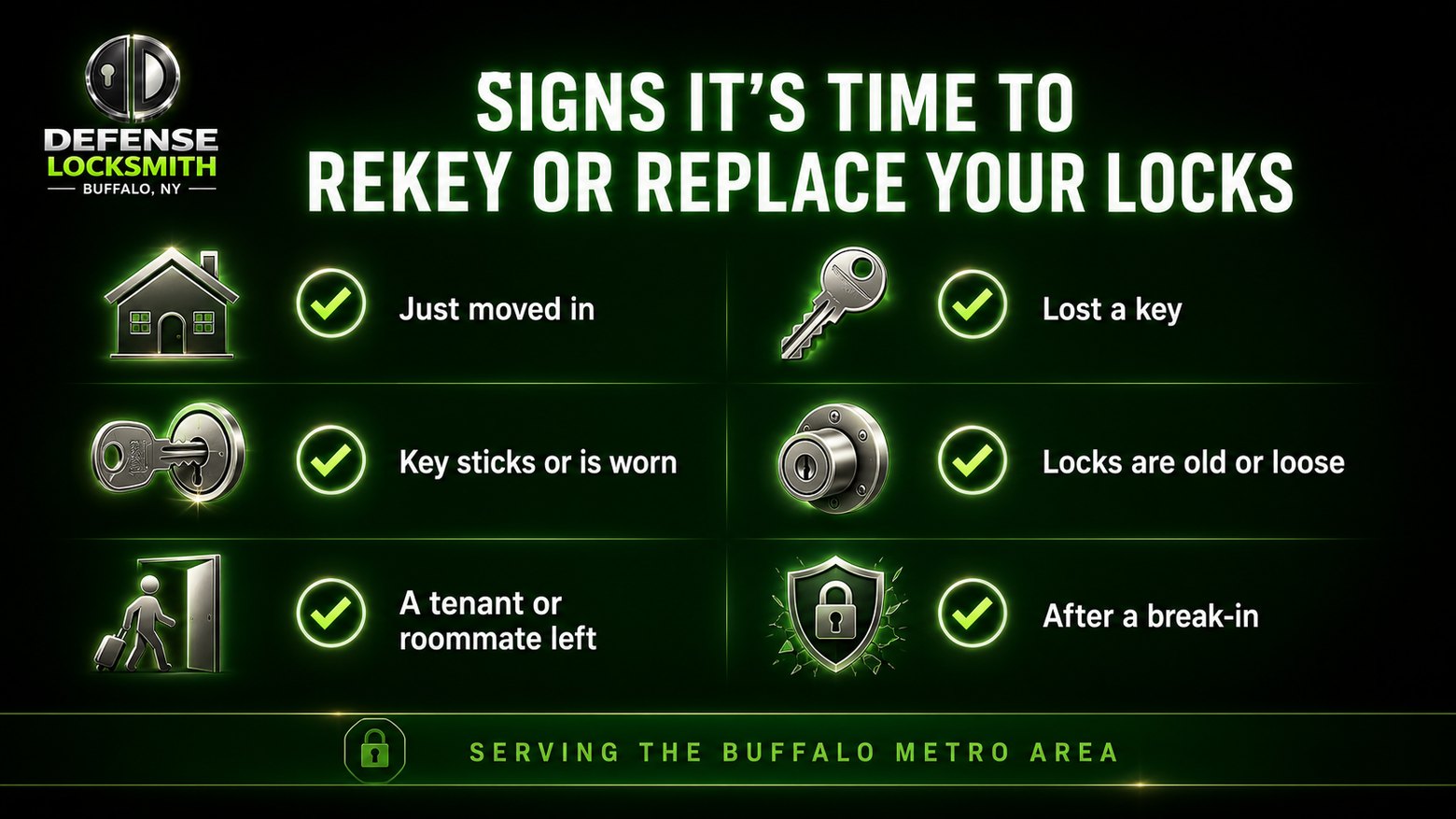
 Rekeying after a move or a breakup, a deadbolt that’s stiff every winter, a latch that doesn’t catch, a fresh install, a snapped key stuck in the cylinder — all of it is off the menu at a kiosk. This is the bread and butter of an actual locksmith: rekeying runs $19 per cylinder, broken-key extraction from $49, and the hardware gets inspected by someone who can tell you whether the real problem is the key, the cylinder, or a door that sagged.
5. High-security and restricted keys — on purpose
Medeco, Mul-T-Lock, restricted commercial keyways, keys stamped “Do Not Duplicate”: kiosks will refuse most of these, and honestly, they should. Key control is a security feature — the entire point is that copies only come from authorized dealers with authorization on file. If a machine in a grocery store could clone your restricted key, your restricted key wouldn’t be worth much. A locksmith handles these through the manufacturer’s proper channels.
“Twice a week, someone meets me in a parking lot holding a kiosk car key that turns the ignition and starts nothing. The blade’s fine. The chip’s a stranger. They’re not mad at the machine — the machine did exactly what it said — they’re mad that nobody at the checkout lane mentioned the other half of the job. That’s the whole kiosk story in one sentence: it does half of most jobs and all of one.” — Simon Goodman, owner, Defense Locksmith
Watch the Half a Kiosk Can’t Do
Cutting the blade is the visible half of a modern car key. The invisible half — putting the key’s chip into conversation with your car’s immobilizer — is the part that actually starts engines, and it’s the part that happens at your curb, not at a checkout lane:
Kiosk vs. Local Locksmith: The Honest Comparison
Job by job, here’s who can actually do what:
| The job | Store kiosk | Local locksmith |
|---|---|---|
| Spare of a healthy brass house key | Yes — its one great trick | Yes |
| Copy of a worn or “jiggle-it” key | Copies the wear, and the problem | Cuts to factory code — fresh key |
| Transponder / chip car key, working same day | No — blade only, or a mailed key days later | Yes — cut & programmed on-site |
| Push-to-start smart fob | No | Yes |
| All keys lost (no original to scan) | No — nothing to photograph | Yes — keys originated from the vehicle or lock |
| Lockout — house or car | No | Yes, 24/7 |
| Rekey, repair, install, broken-key extraction | No | Yes |
| High-security / restricted / “Do Not Duplicate” | Refused | Handled through authorized channels |
| Someone accountable if it doesn’t work | A support line | A local business that drives back |
What It Costs in Buffalo: Machine Money vs. Locksmith Money
 Fair is fair — here’s the honest price picture, including the one line the kiosk wins:
| Service | Kiosk | Defense Locksmith |
|---|---|---|
| Basic brass key copy (healthy original) | Around $3–$8 — the kiosk’s win | $25, cut and verified |
| Key that actually works from a worn original | Roll the dice | $25, cut to code |
| Transponder key, cut + programmed, same visit | Not offered — mailed blank still needs programming | From $99, starts the car before we leave |
| Key fob programming | Not offered | From $75 |
| All keys lost — standard vehicle | Not possible | From $179 |
| Rekey after moving in | Not possible | $19 per cylinder |
| House or car lockout | Not possible | From $35 |
Full, current numbers live on our Buffalo price list. Notice the pattern: when both options exist, the kiosk is cheaper on the simplest version of the job and absent for everything past it. That’s not a criticism — it’s a vending machine. You just want to know where the vending-machine part ends before you’re standing in a parking lot with a key that won’t start your car.
The Ten-Second Decision
Standing at the kiosk wondering? Three questions settle it:
- Does the key have any electronics — a chip, buttons, a fob, push-to-start? Locksmith. No exceptions worth gambling on.
- Does the original work perfectly — no jiggling, no worn-smooth cuts, and it’s not a copy of a copy? If not: locksmith, cut to code.
- Is the real problem the lock, the door, or being locked out? The machine sells keys; it cannot touch any of those. Locksmith.
 Pass all three — healthy plain brass key, just want a cheap spare — and the kiosk at the store is honestly fine. That’s the whole decision.
“The app kiosks save your key’s cutting code to an account, and people ask me if that’s safe. Here’s my measured answer: it’s convenient, it’s probably fine for a basic house key, and it’s one more copy of your key that exists somewhere you can’t see. For a rental, a business, or any door you genuinely worry about, the answer isn’t a cloud account — it’s a restricted key that physically can’t be copied without authorization, and a $19 rekey the day anything feels off. Security you control beats convenience you rent.” — Simon Goodman, Defense Locksmith
Questions Buffalo customers ask us
Do kiosk car keys actually work?
The metal blade a kiosk cuts will physically turn your ignition, but on nearly every vehicle made since the late 1990s the engine won’t start until the key’s transponder chip is programmed to the car. Kiosks don’t program chips at the machine — some brands mail a chipped key later, which still typically needs programming to your vehicle. A mobile locksmith does the cut and the programming in one curbside visit, from $99.
Why doesn’t the key the kiosk made work in my door?
Usually because the original you scanned was worn, or was itself a copy. The machine reproduces the blade it sees — wear, drift, and all. A locksmith fixes this by decoding the lock or key back to factory specifications and cutting to code, which is essentially a brand-new original rather than a photocopy.
Can a kiosk copy a “Do Not Duplicate” or high-security key?
 Kiosks refuse most restricted, high-security, and DND-stamped keys — and that refusal is a feature, not a failure. Restricted keyways only stay meaningful if copies are controlled. Authorized duplication for systems like Medeco or Mul-T-Lock goes through a locksmith with the paperwork on file.
Is it safe that the kiosk app saves my key?
It’s a trade-off. Storing your key’s cutting pattern in an account is genuinely convenient for reordering — and it means a working copy of your key exists as data outside your control. For an ordinary house key, most people accept that. For anything sensitive, use keys that can’t be casually cloned and rekey when in doubt.
Isn’t the locksmith way more expensive?
For a simple brass copy, no contest — the kiosk’s few dollars beats our $25. For everything else, the comparison isn’t more-vs-less, it’s possible-vs-impossible: chip keys, fobs, all-keys-lost, lockouts, rekeys, and repairs simply aren’t on the kiosk’s menu at any price. And a $25 key that works beats a $4 key that doesn’t.
I’m locked out right now — can any kiosk help?
 No. Kiosks copy keys you hand them; they can’t open anything, and if your only key is inside, there’s nothing to scan. That’s a 24/7 locksmith call — house and car lockouts from $35, non-destructive in the large majority of cases.
Need More Than a Copy? That’s Us.
Defense Locksmith is owner-operated by Simon Goodman and fully mobile across the Buffalo metro — car keys cut and programmed at your curb, locks rekeyed, doors opened, hardware fixed, 24/7. Straight total on the phone before we roll: (716) 803-2934. And if the kiosk key let you down, bring it — we’ll tell you honestly whether it’s the key or the lock.
Official resources
- FTC Consumer Advice — guidance on hiring service professionals
- ALOA Security Professionals Association — find credentialed locksmiths nationwide
- NYS Department of State — verify a New York business entity
- City of Buffalo — local licensing and consumer resources