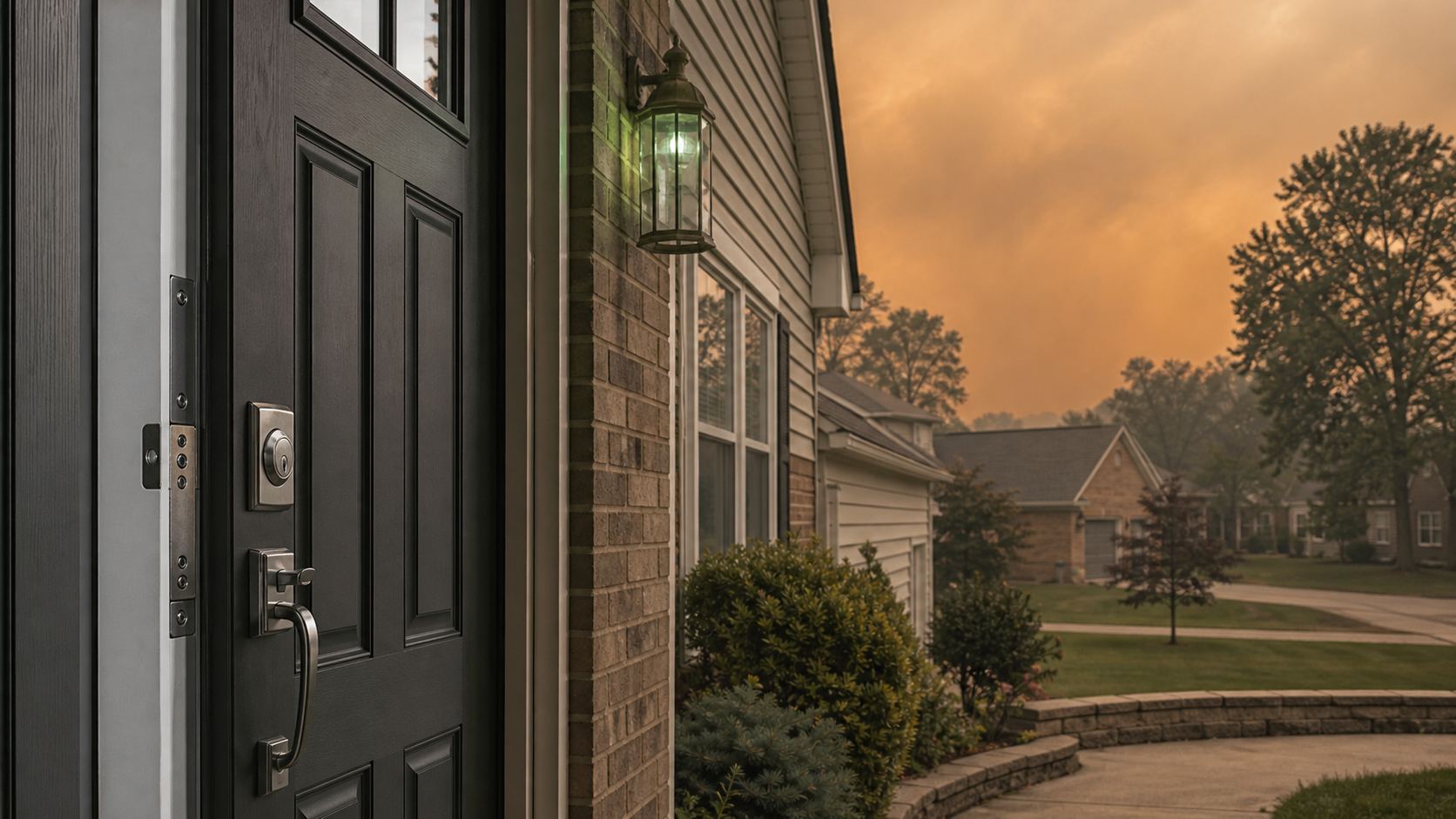
Updated July 17, 2026. Smoke from a large cluster of wildfires in northwestern Ontario moved across the Great Lakes and into New York this week, degrading air quality from Western New York through Central New York, the Hudson Valley, New York City and Long Island. The smoke may look like haze high in the sky, or it may mix down to street level and raise concentrations of fine particle pollution known as PM2.5.
Important: An air-quality advisory is not an evacuation order. The Ontario fires described here are far from New York; the immediate New York concern is smoke, not flames crossing the border. If your local government issues an evacuation order for any wildfire or other emergency, follow it immediately. Do not delay departure to secure property or wait for a locksmith.
This guide explains what is happening, why wildfire smoke is dangerous, how to keep indoor air cleaner, what to take if an evacuation is ordered, what to do if you are locked out during smoky conditions, and how to secure a home without creating an obstacle to a fast escape.
What is happening in Ontario and New York?
This is not one isolated wildfire. In its July 16 forest-fire update, Ontario reported 136 active wildland fires in the Northwest Region. Sixty-three were not under control. The province identified significant growth around Wabakimi Provincial Park, the Atikokan and Quetico area, Fort Hope, Cat Lake and several First Nations communities. Ontario had recorded 483 fires during the 2026 season at that point, compared with a 10-year average of 320.
Ontario also issued evacuation alerts—instructions to prepare to leave on short notice—for areas near Fort Frances fires 14, 15, 38 and 39 and Minnesota’s Thumb Fire. Those alerts apply to specific areas in Ontario, not New York. They do show how quickly conditions can change near an active fire.
In New York, the concern has been transported smoke. On July 15, the state expanded a PM2.5 Air Quality Health Advisory statewide. State officials said Western New York was expected to see some of the greatest effects, but warned of poor-air spikes across every region. New York City later reported surface-level readings in the “Unhealthy” range, while NYC Emergency Management forecast an AQI of 200 for July 16.
Smoke location and intensity can change by the hour as winds shift and smoke mixes toward or away from the ground. A blue-looking sky in the morning does not guarantee clean air in the afternoon. Check the AirNow AQI or the New York DEC air-quality forecast before outdoor work, exercise or travel.
Why wildfire smoke is dangerous even when the fire is far away
Wildfire smoke is a mixture of gases and particles. The main short-term health concern is PM2.5—particles 2.5 micrometers wide or smaller. These particles can travel deep into the lungs. Ontario’s health guidance notes that PM2.5 can make up as much as 90% of the particle mass in wildfire smoke.
Common symptoms include irritated eyes, nose or throat, a runny nose, headache and cough. More serious symptoms include wheezing, dizziness, chest pain, heart palpitations or difficulty breathing. Call 911 for a medical emergency. Anyone whose symptoms are worsening should seek medical advice.
Everyone can be affected when smoke is heavy. Risk is higher for children, older adults, pregnant people, people with asthma, COPD, heart disease, diabetes or other chronic conditions, people who work or exercise outside, and people without reliable access to cool, filtered indoor air. Pets can be affected too.
Use the AQI as an action guide
| AQI | Category | Practical response |
|---|---|---|
| 0–50 | Good | Normal activity is generally appropriate. |
| 51–100 | Moderate | People unusually sensitive to particle pollution should watch for symptoms. |
| 101–150 | Unhealthy for Sensitive Groups | At-risk people should reduce prolonged or heavy outdoor exertion. |
| 151–200 | Unhealthy | Everyone should reduce exposure; sensitive groups should avoid outdoor exertion. |
| 201–300 | Very Unhealthy | Health alert: stay in cleaner indoor air and minimize outdoor time. |
| 301+ | Hazardous | Emergency conditions: avoid outdoor exposure and follow official instructions. |
AQI is local. Use the reading nearest you, and remember that temporary smoke spikes may occur between forecast updates.
How to keep wildfire smoke out of your home
- Close windows and exterior doors. Limit unnecessary trips in and out. Check that window locks and latches pull the sash closed, but never block a required emergency exit.
- Keep the home cool. Heat can be the more immediate danger. If your home becomes too hot, go to an air-conditioned cooling center, cleaner-air shelter, library, community building, or another safe location. Do not remain in a dangerously hot house simply to keep windows closed.
- Set central HVAC to recirculate. If the system has a fresh-air intake, close it or use recirculation during heavy smoke. Run the fan more often to move air through the filter.
- Use the best filter your system can safely handle. EPA recommends MERV 13 when compatible with the system, or the highest efficiency the equipment can accommodate. A filter that is too restrictive for a particular system can cause problems, so ask an HVAC professional if you are unsure.
- Run a properly sized portable air cleaner. Choose one designed for the room and avoid devices that intentionally produce ozone. A bedroom can become a cleaner-air room when doors and windows remain closed and the filter runs continuously.
- Reduce indoor particles. Avoid smoking or vaping, candles, incense, aerosol sprays, frying or broiling, and unnecessary vacuuming. If vacuuming is essential, use a HEPA-equipped machine.
- Wear a well-fitting N95 outdoors. Cloth masks do not filter wildfire smoke effectively. A properly fitted NIOSH-approved N95 can reduce exposure to fine particles, but it does not make strenuous outdoor activity safe.
- Use recirculate in the car. Keep windows closed, set ventilation to recirculate and replace a dirty cabin filter when conditions permit. Never idle a vehicle in a garage.
If smoke and extreme heat overlap, prioritize staying cool. New York City’s emergency guidance specifically advised people without safe air conditioning at home to use a cooling center, because a cool indoor public space offers protection from both hazards.
If an evacuation is ordered: people first, locks second
A smoke advisory normally calls for reducing exposure, not evacuating an entire community. Evacuation becomes relevant when a local fire, hazardous-material incident, flood, structural emergency or another immediate danger threatens your area. Listen to county and municipal alerts, the Emergency Alert System, local fire and police departments, and official emergency-management accounts.
“If officials tell you to leave, leave. A door can be repaired and a lock can be replaced. People cannot.”
— Simon Goodman, owner, Defense Locksmith LLC
Prepare before an order is issued
- Keep a go-kit with medications, water, N95s, a phone charger or battery bank, identification, insurance information, copies of essential documents, cash, pet supplies and basic clothing.
- Keep house and vehicle keys together in a known place. Put a labeled spare in the go-kit, but do not label it with your address.
- Arrange two ways out of your neighborhood and a meeting place outside the hazard area.
- Plan for children, older adults, people with mobility or medical needs, and pets. Shelters may have different pet rules.
- Sign up for local emergency notifications before the crisis. In New York, official county and city alerts are more reliable than neighborhood rumors or social-media screenshots.
If you have time to secure the house
Do these steps only if authorities have not told you to leave immediately and the route is still safe:
- Get every person and pet ready first. Load the go-kit, medications, documents and keys.
- Close windows and exterior doors to reduce smoke and ember entry. Close the garage door.
- Lock normal exterior locks in one pass as you leave. Do not spend time troubleshooting a jammed lock, searching for a missing key or installing hardware.
- Move lightweight combustible items such as patio cushions away from the house only if a nearby-fire plan calls for it and you have ample time. Never climb onto a roof or approach smoke or flames.
- Leave utilities alone unless local officials or the utility company specifically instruct you to shut them off.
- Do not add improvised bars, padlocks or double-keyed arrangements that could trap someone inside or obstruct firefighters.
- Leave early and follow designated routes. Never drive around a barricade or return for property.
What to do if you are locked out during heavy smoke or an evacuation
A lockout is stressful in normal weather. During an air-quality emergency, it can become a health problem; during an evacuation, it can become a life-safety emergency.
If a person, child, vulnerable adult or pet is inside
Call 911 immediately if anyone inside is in danger, if the home is becoming dangerously hot, if smoke or fire is nearby, or if an evacuation order is active. Tell the dispatcher exactly who is inside, the address, any medical needs and whether you can see or smell smoke. Follow the dispatcher’s instructions. Emergency responders may need to force entry; property damage is secondary to life safety.
If no one is trapped and there is no immediate danger
- Move to cleaner air—an air-conditioned public building, a neighbor’s filtered home or a vehicle with windows closed and ventilation on recirculate.
- Check for an authorized spare with a household member, property manager or trusted nearby contact. Do not search for hidden keys for a long time in unhealthy air.
- Do not pry the door, kick it, climb to an upper window or break glass. Those actions can cause injury, make the home less secure and increase repair costs.
- Call a legitimate mobile locksmith and explain the air-quality or evacuation situation. A reputable locksmith will identify the business, quote the service structure clearly and ask for proof that you are authorized to enter.
- If authorities close the area, leave it. A locksmith cannot override an evacuation order or road closure.
Defense Locksmith LLC is a fully mobile locksmith serving Erie and Niagara counties and Buffalo-side communities in Genesee and Orleans counties. For a house lockout when the area is safe and open, call (716) 803-2934. See our house lockout service and emergency locksmith guidance.
Secure your home before the next emergency
Emergency security is mostly preparation, not extra locks added at the last minute. The goal is to make departure simple, keep authorized access available and avoid trapping occupants.
- Test every exterior door. A deadbolt should extend fully without pushing, pulling or lifting the door. A binding bolt wastes time during an emergency and may not secure the door properly.
- Inspect strike plates and frames. Loose hardware, split wood and misaligned strikes should be repaired before an emergency.
- Maintain two safe exit routes. Security hardware must never prevent people from opening an exit quickly from inside.
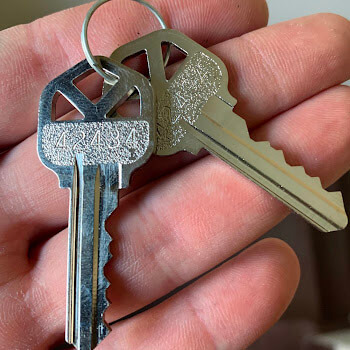
- Use a controlled spare-key plan. Give a spare only to a trusted person or keep it in a secured, managed location. Do not use obvious hiding places near the door.
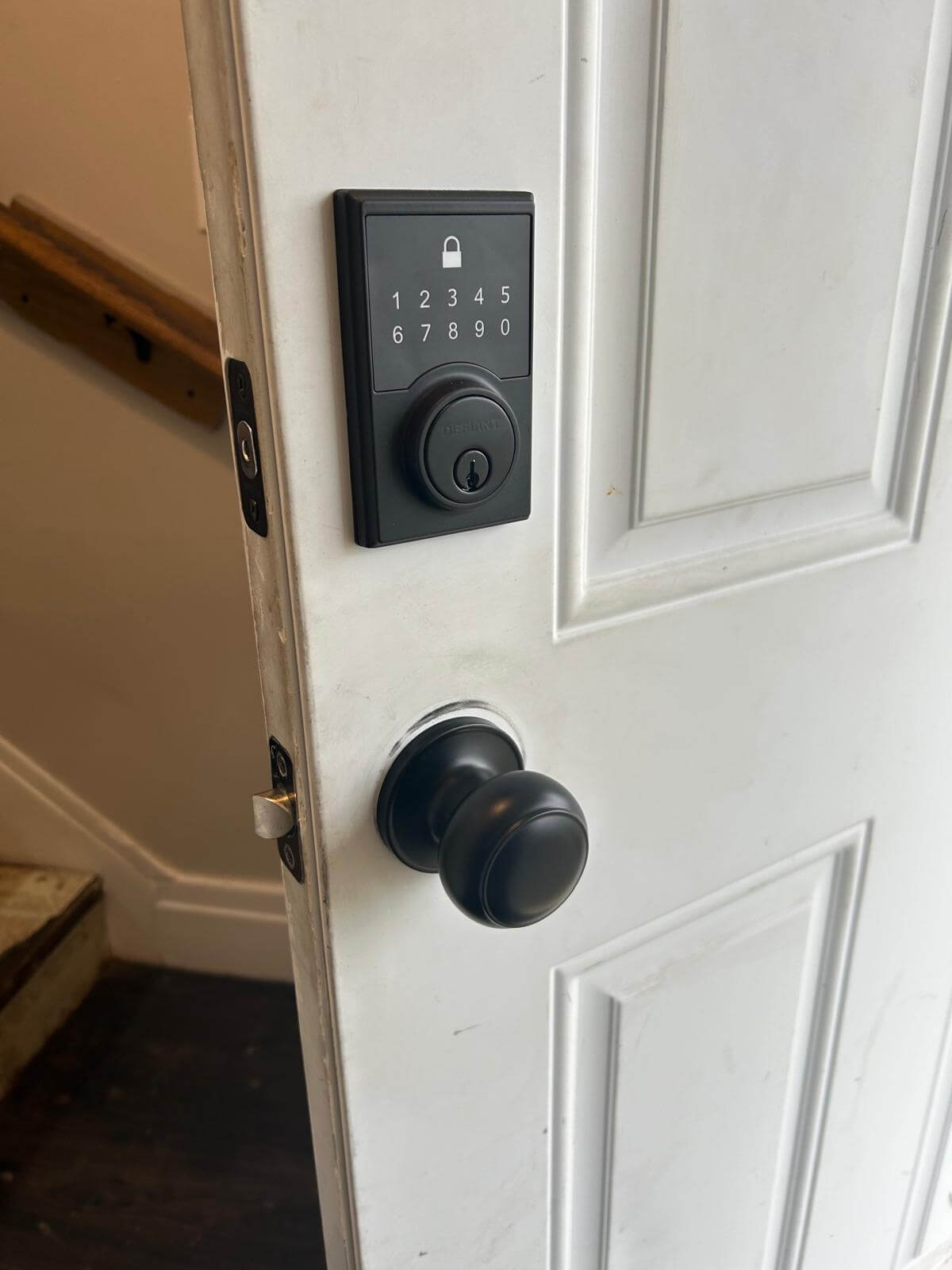
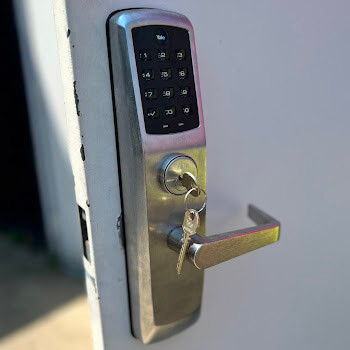
- Prepare smart locks for outages. Replace weak batteries, know how the mechanical key override works, keep that key accessible and understand any exterior emergency-power feature. Wi-Fi failure should not become a lockout.
- Review keypad codes. Remove codes for former contractors, tenants or guests. Give emergency access only to people who need it, and change a temporary code after the event.
- Rekey after a lost key. If a key disappears during an evacuation, shelter stay or cleanup, assume it may be outside your control. Rekeying usually restores key control without replacing every lock.
- Coordinate in rentals. Tenants should not make unauthorized lock changes. Landlords and property managers should maintain lawful emergency-access procedures and current contact information.
- Protect businesses without blocking egress. Commercial doors, panic hardware and fire-rated assemblies must remain code-compliant. Review key control, access-control backup behavior and authorized responder access with qualified professionals.
For planned improvements, see our residential locksmith services, smart-lock installation and commercial locksmith services.
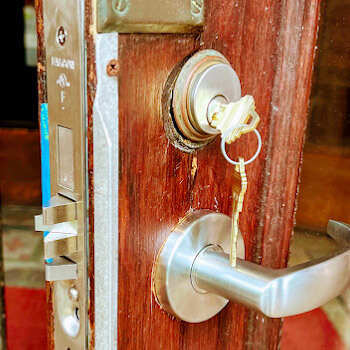
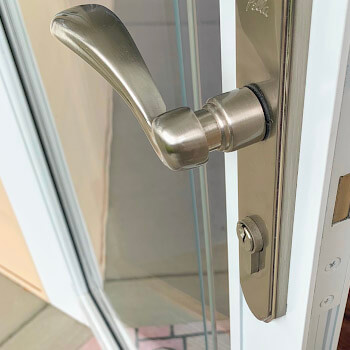
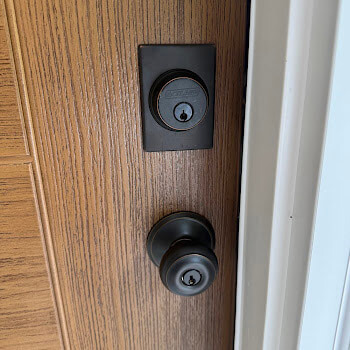
A visual emergency-security checklist
Returning home after an evacuation
- Wait until officials say the area is open. A cleared road does not necessarily mean a building is safe.
- Look from outside for fire damage, downed wires, broken glass, forced entry, a damaged door frame or a door that is standing open. Call 911 for an active hazard or suspected burglary.
- Photograph damage before temporary repairs when it is safe to do so, and contact your insurer or property manager.
- If emergency responders forced a door, use a proper temporary board-up or repair that preserves required exits. Do not occupy a building that officials have declared unsafe.
- Change codes and rekey locks if keys, credentials or access devices were lost or shared outside their normal circle.
- Ventilate only when outdoor air quality improves. EPA advises airing out the home during a cleaner-air window, then returning HVAC settings to normal.
- If ash is present from a nearby fire, avoid dry sweeping. Wear appropriate protection and follow local cleanup guidance. Children, pregnant people and people with heart or lung disease should not handle ash cleanup.
Quick answers for New Yorkers
Are the Ontario flames threatening homes in New York?
The July 2026 New York notices concern smoke transported over long distances, not a fire front moving into the state. Local New York fires and other emergencies can still occur, so follow alerts for your own county and municipality.
Should I evacuate because the AQI is high?
Do not treat an AQI advisory as an automatic evacuation order. Reduce exposure and seek a cool, filtered indoor location. If you cannot keep your home cool, if indoor air remains smoky, or if someone develops serious symptoms, move to an appropriate public facility or seek medical care. Follow any instructions issued by local officials.
Can I run air conditioning?
Yes—staying cool is essential. Use recirculation and close an outdoor-air intake when your system allows it. Window and portable units vary, so consult the manual; single-hose portable units can draw smoky outdoor air into a building.
Will a cloth or surgical mask protect me from wildfire smoke?
Not reliably. A well-fitting NIOSH-approved N95 respirator is designed to filter fine particles. It does not remove all gases in smoke and does not replace cleaner indoor air.
What if my smart lock loses power?
Know the backup method before an emergency. Most residential smart locks use a mechanical key, an exterior emergency-power contact or both. Keep the override key accessible outside the locked home—but not hidden beside the door—and replace batteries before they fail.
Official sources and live updates
- Ontario Ministry of Natural Resources: Forest fires and evacuation alerts — updated July 16, 2026
- Environment and Climate Change Canada: wildfire smoke air-quality warnings — issued July 17, 2026
- New York State: statewide air-quality advisory update — July 15, 2026
- NYC Emergency Management: smoke and heat response — July 15, 2026
- EPA AirNow: current AQI and Fire and Smoke Map
- U.S. EPA: wildfires and indoor air quality
- American Red Cross: wildfire preparation, evacuation and return guidance
This article provides general preparedness information, not medical, legal or emergency-direction advice. Conditions and official instructions can change quickly. Call 911 for immediate danger or a medical emergency.
Stay locked, Buffalo.