When a Car Key Needs a Soldering Iron: EEPROM, ISN, and All-Keys-Lost Work in Buffalo
Most car keys are made in about twenty minutes. You call, we come out, the machine cuts a blade, the programmer talks to the car over the diagnostic port, and you drive away. That is the ordinary version of this job and it covers the large majority of what rolls through our week.
 Then there is the other kind. The car that will not hand over anything through the OBD port. The one where the immobilizer data lives on a memory chip buried inside a module, and the only way to a working key is to take the module out, open it up, and read the chip directly — with a soldering iron. Three of those landed in the same stretch of days, so we photographed them. Here is what that work actually looks like, and why it matters if you are the one standing in a parking lot with no key.
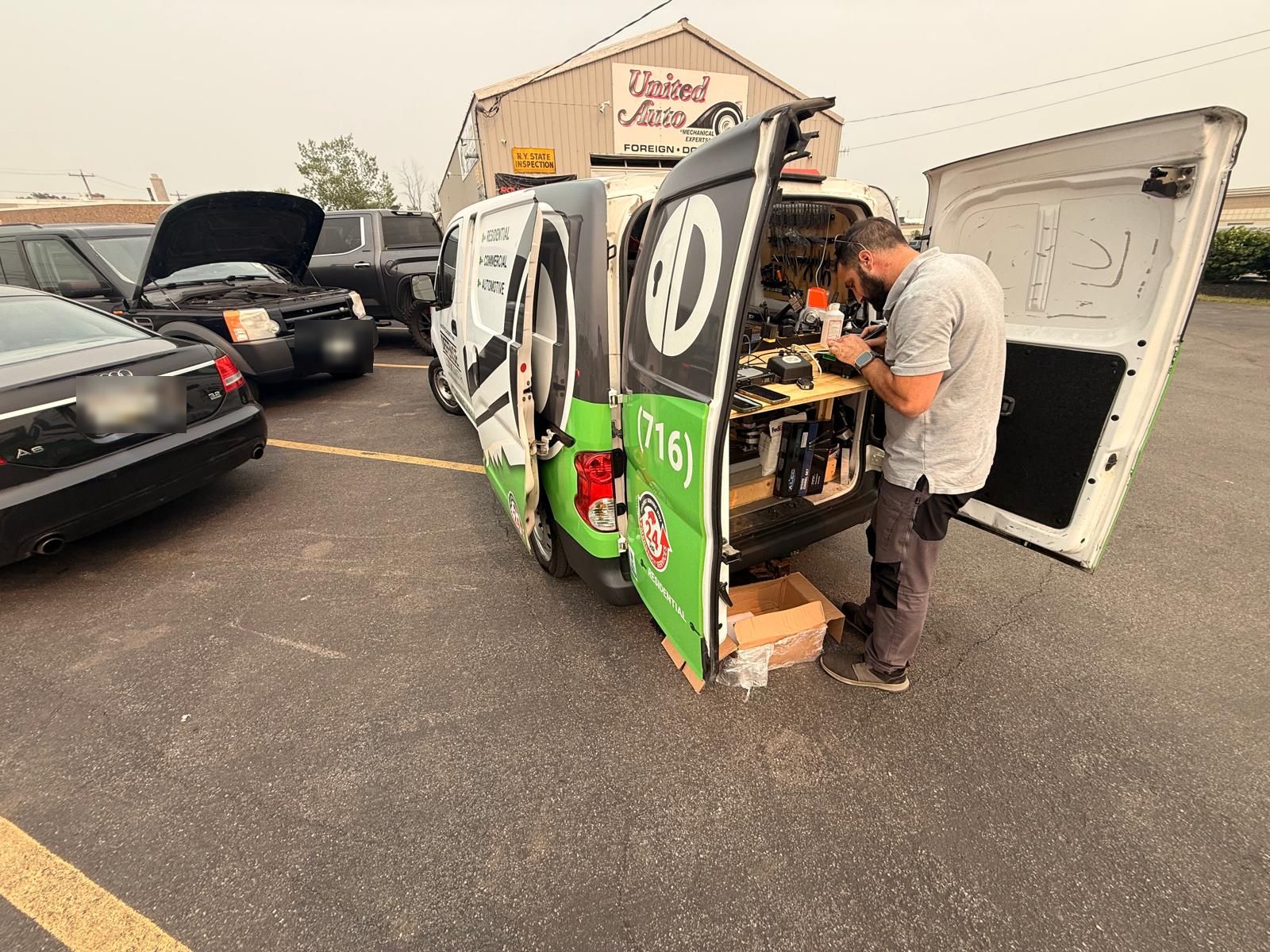
Job One: A 2007 Range Rover That Had to Have Its Brain Opened
A 2007 Land Rover Range Rover came to us needing an additional key. On a lot of vehicles that is a plug-in job. On this generation of Range Rover it is not, because the immobilizer information the car checks before it will start is stored in the body control module — the BCM — and that module does not simply hand the data over through the diagnostic socket.
So the module comes out of the vehicle and onto the bench. The housing is opened, the circuit board comes out, and the EEPROM is located. EEPROM stands for electrically erasable programmable read-only memory, which is a mouthful for a very simple idea: it is the small chip that remembers things after the power goes away. Your mileage, your VIN, your immobilizer data — that class of information lives there. Read the chip, and you have the data the car wants to see before it will accept a new key.
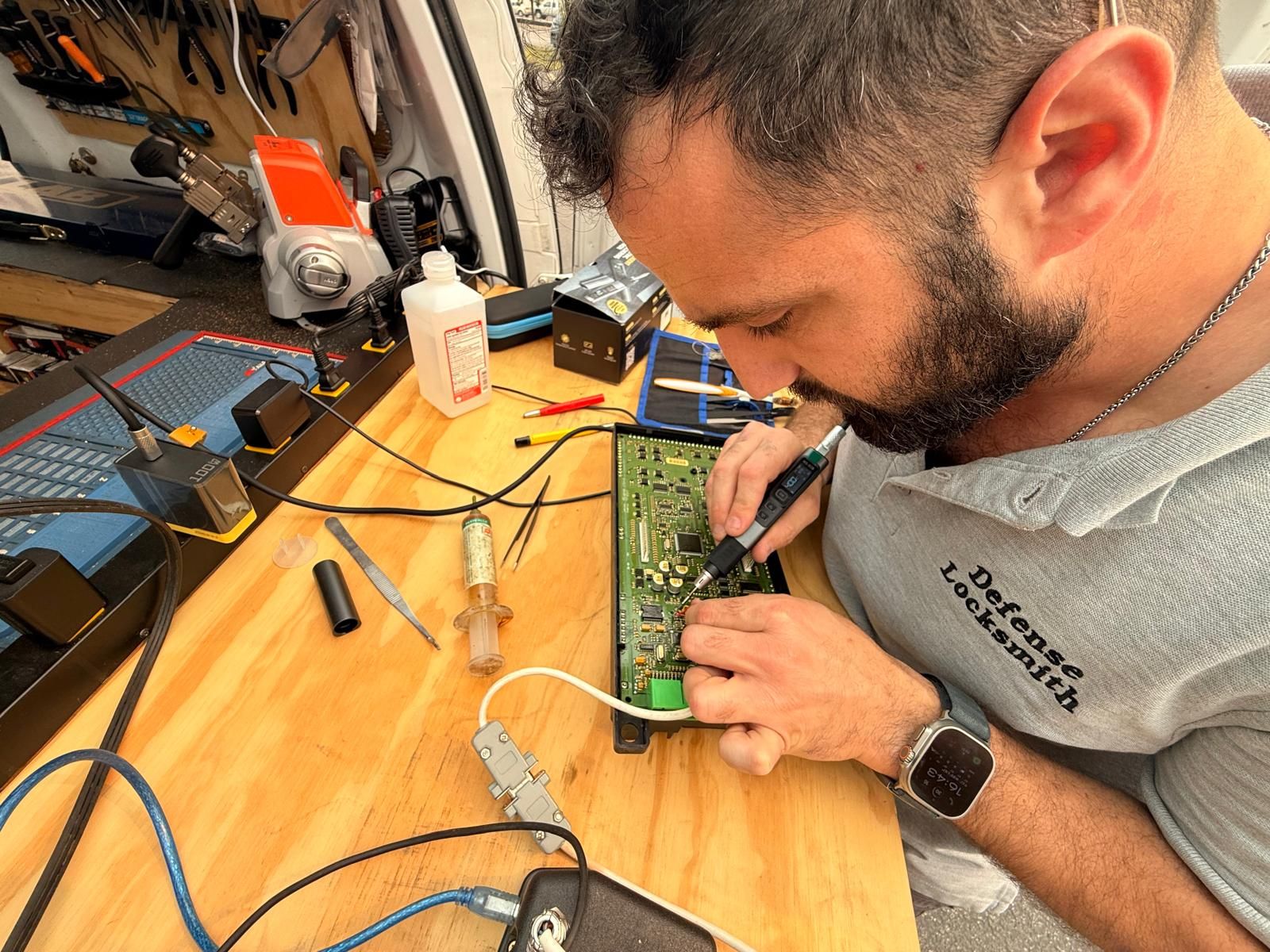
 Reading it means making a physical electrical connection to the chip’s legs. That is soldering, on a board that costs real money to replace, on a customer’s vehicle, in a parking lot. There is no undo button. A slip that lifts a pad or bridges two pins turns a key job into a module replacement, which is exactly the outcome nobody wants. This is the part of the trade that takes years rather than weeks, and it is the reason the work is worth what it costs.

Once the data is read, the immobilizer information is decoded, a key is cut to the vehicle, the new key is written in, and the module goes back into the car. The customer gets a working key and keeps the original module — no dealer order, no week-long wait for a part, no flatbed.
Job Two: A BMW and Its 32-Digit Secret
The second car was a BMW, and BMW plays a different game. On many models the engine computer — BMW calls it the DME, everyone else would say ECU — and the immobilizer system share a secret value called the ISN, the individual serial number. It is a long code, thirty-two characters of it, and the car will not accept a newly programmed key unless that code is known and matches.
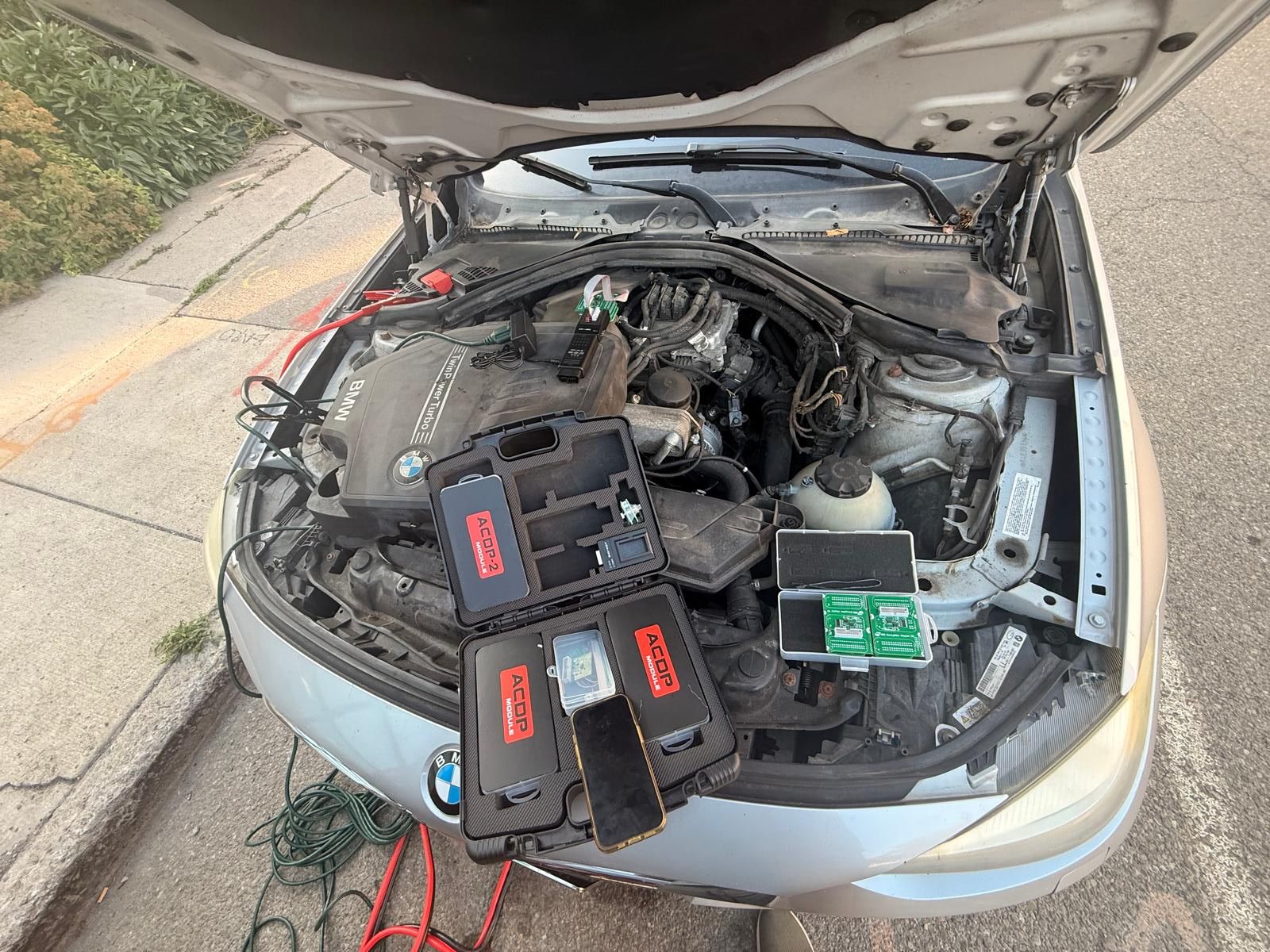
 When a customer still has one working key, none of this comes up. The moment every key is gone — the situation the trade calls all keys lost — the ISN becomes the whole job. It has to be recovered from the engine computer before a key can be made at all. That is why an all-keys-lost BMW is not the same phone call as “I lost one of my two keys,” and why an honest shop will ask you that question first and quote accordingly.
It is also why the number on the phone changes so much between vehicles. Adding a spare to a car that already has a working key is a short visit. Recovering a code out of an engine computer because every key is gone is a different job with different tools and a different price, and anybody quoting you one flat number before asking which situation you are in is guessing.
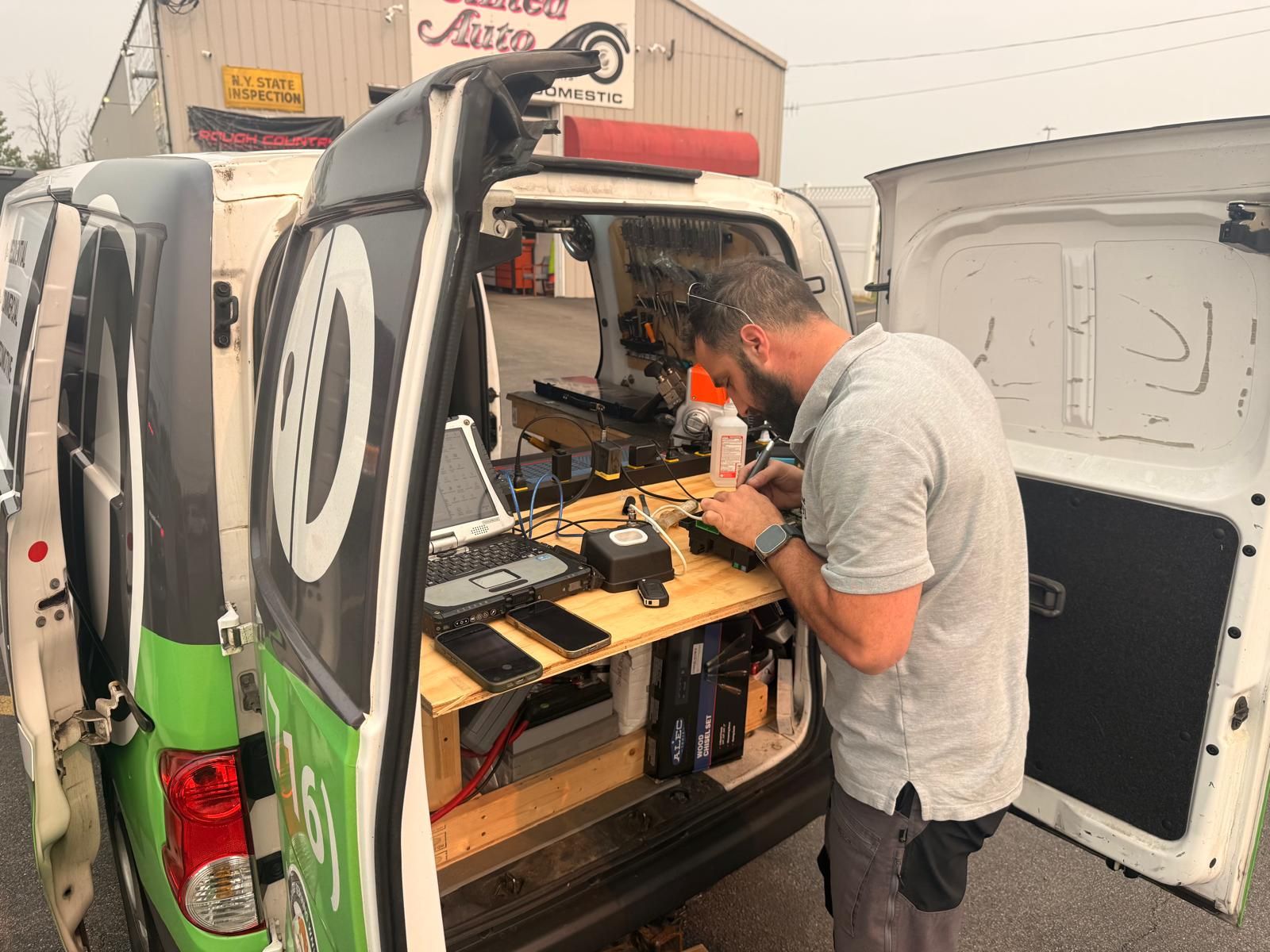
Job Three: A 2016 VW Jetta, Read Straight Off the Board
The third was a 2016 Volkswagen Jetta that needed a key added, and it went the same direction as the Range Rover: onto the bench, module open, wires on the board, data off the chip.
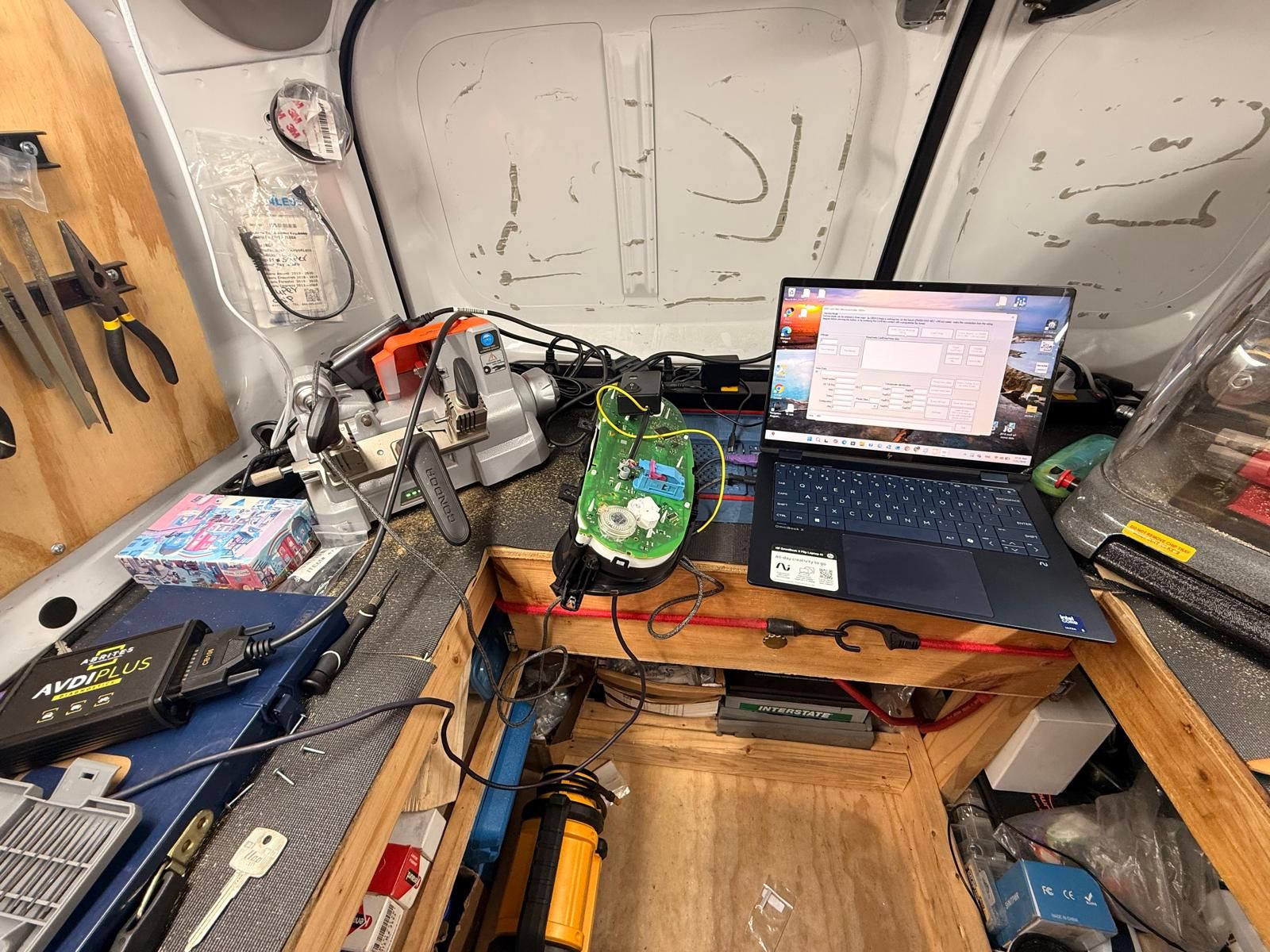
 Volkswagen deserves a note here because so many Buffalo drivers own one. The immobilizer generation matters enormously on these cars. Depending on model year and platform, a Jetta key can be anything from a routine plug-in to a component-protection job that has to be handled at module level. Same badge on the hood, completely different afternoon. If you have called around for a VW key and gotten four wildly different prices, that is why — some of those shops were quoting the easy version of your car.
What All Three Jobs Have in Common
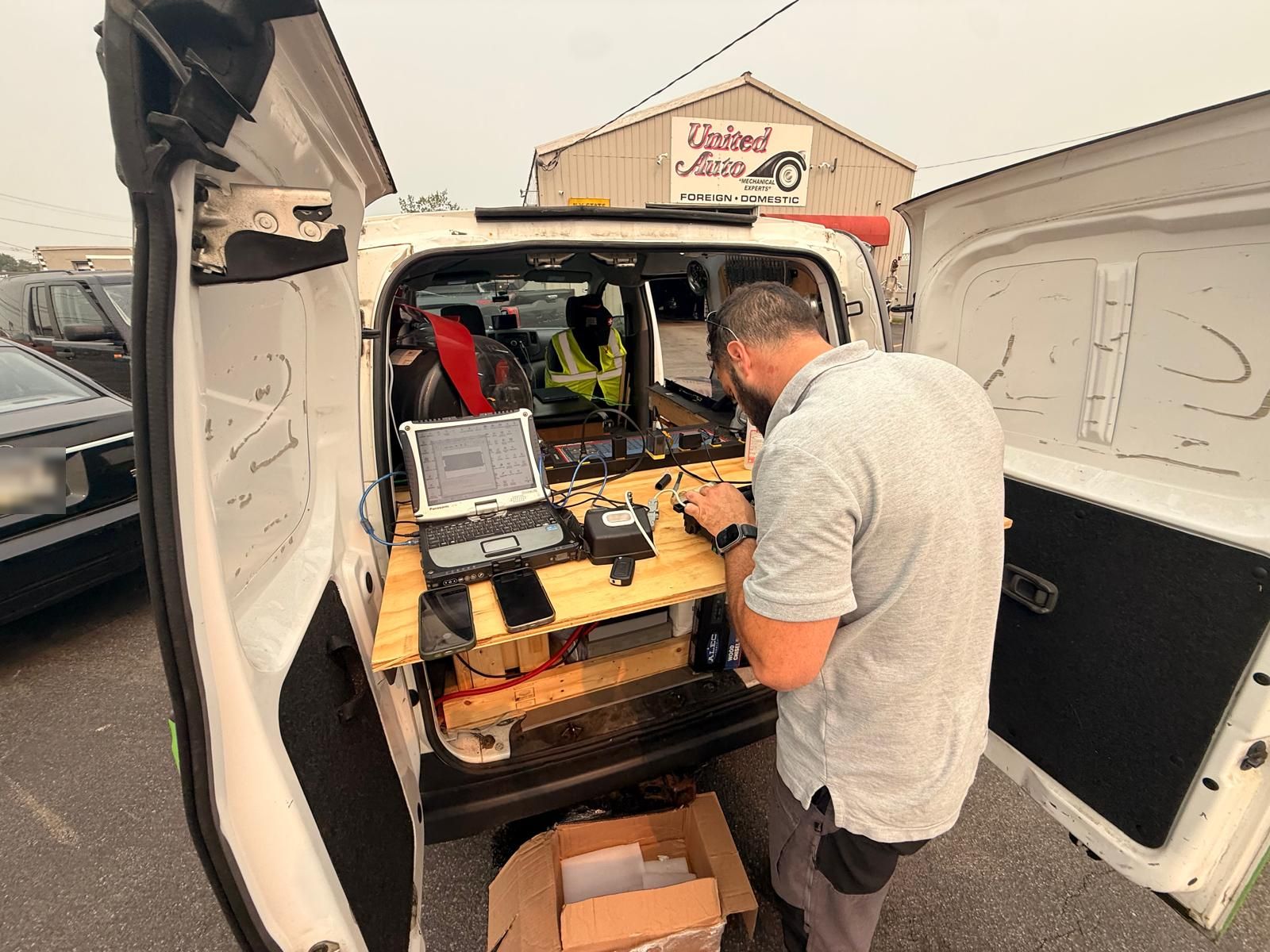
Not one of these three cars could have been solved by a key-cutting machine in a hardware aisle. A blank cut to the right shape opens the door on some of them and starts none of them, because the metal is not the security — the data is. We wrote a whole piece on that gap between key kiosks and a real locksmith, and these three jobs are the argument in physical form.
They also explain the thing people find hardest to believe about car keys: why the price range is so wide. A spare key for a common sedan and an all-keys-lost European car with module work are both “a car key” in the way that a bicycle and a motorcycle are both “two wheels.” The immobilizer programming is the actual product. The cut blade is the packaging.
One more thing worth saying plainly, because we get asked: work like this is done for verified owners only. Proof of ownership — registration or title matching your identification — comes before the module ever leaves the car. That is the standard any legitimate shop holds, and it is the reason we are comfortable showing you the bench in the first place.
What This Means If You Have Lost Every Key
 If you are reading this because there is a car in your driveway you cannot start, a few things will make your day shorter:
Know which situation you are in. “I have one key and want a spare” and “I have no keys at all” are different jobs. Say which one when you call and the quote you get will actually hold.
Have the paperwork ready. Registration or title plus your photo ID. No legitimate locksmith will make a key for a vehicle you cannot show ownership of, and having it in hand saves a second trip.
 Know the year, make and model — and the VIN if you can get it. The VIN is usually visible through the windshield at the base of the driver’s side. It tells us what we are actually dealing with before we roll, which is how you get a real number instead of a hopeful one.
Do not assume the dealer is the only option. Two of these three cars would have meant a tow to a dealership and a wait. All three were finished where the vehicle sat.
“People see a car key and think of the metal. The metal is the cheap part. What you are actually paying for on a job like the Range Rover is somebody who can take the module out of your truck, solder onto a chip the size of a fingernail, read it without killing the board, and put it all back so the truck starts. Get that wrong and you have turned a key job into a very expensive parts job. That is the skill. That is why we still do it out of the back of a van instead of sending you to a dealer.” — Simon Goodman, Defense Locksmith, Buffalo NY
Questions Buffalo drivers ask us about module and EEPROM work
What is an EEPROM, in plain English?
It is the small memory chip inside a control module that remembers information after the car is switched off — things like the VIN, mileage and immobilizer data. When a vehicle will not release its key data through the diagnostic port, reading that chip directly is how the required information is recovered. It is the difference between asking the car politely and going to the source.
Does opening my module damage the car or void anything?
 Done properly, no. The module is removed, opened on an anti-static surface, read, closed and refitted, and the vehicle goes back to normal operation. The risk is entirely in the hands doing it — a poor solder joint or a lifted pad is what causes damage, not the process itself. This is precisely why it is worth asking whether whoever you are calling actually does module-level work in-house or subcontracts it out.
Why is an all-keys-lost job more expensive than a spare key?
Because they are not the same work. With a working key in hand, the car will usually cooperate through the diagnostic port and the visit is short. With every key gone, the security data has to be recovered first — from a module, sometimes from the engine computer, occasionally with a soldering iron — before a key can even be cut. More tools, more time, more skill, and more that can go wrong.
Can you really do this at my house or workplace?
Yes, and we usually do. Every photo on this page was taken beside the customer’s vehicle, not in a shop. The bench, the soldering station, the programmers, the key machine and the diagnostic laptops all live in the van, which is the entire point of being a mobile automotive locksmith rather than a storefront.
What do you need from me before you start?
 Proof that the vehicle is yours — registration or title matching your ID — plus the year, make and model, and the VIN if you can read it through the windshield. That combination lets us confirm what the car needs and give you a price that does not change when we arrive.
Lost Every Key to Your Car in Buffalo
Defense Locksmith is Buffalo’s owner-operated, fully mobile automotive locksmith — we cut and program keys, handle push-to-start proximity fobs, take on all-keys-lost jobs, and do the module and EEPROM work that most shops send away. One straight quote on the phone, service across the entire metro: (716) 803-2934. Stranded right now? That is a 24/7 call, and a car key replacement is usually same day.
Official resources
- NHTSA VIN Decoder — look up exactly what your vehicle is
- ALOA Security Professionals Association — find credentialed automotive locksmiths
- NYS Department of State — verify a New York business entity
- City of Buffalo — local business licensing and resources